Forest Wells - Author
  • Home
  • Novels
    • LunaTheLoneWolf
    • BloodofanAlpha
    • FogofWar
  • Shorter Works
  • Appearances
  • Author
    • Not my wolf
  • Contact
  • Newsletter

Not So Easy a Question

4/7/2014

0 Comments

 
Picture
I talked back in January about the question asked of me, “when did you know you were an author?”  At the time I said I don’t think I am yet.  That the term "author" is reserved for those that have been published.

And yet, just a couple days ago, this was doubted.

After some grueling work, I went to my favorite MMO (AKA, online game) to wind down, relax for a while.  A common thing as it’s my best de-stressor, as well as a great way to get my head out of my own fictional world so I can take an honest look at it the next day.  The faction I’m in is tight knit and feels very much like a family.  The people there know me, and we call each other “friend” very honestly.  This allows me to vent about a bad day at work or whatever.  Not so much angry per se.  Just releasing the stress as we all do with our friends.

During such a “vent”, one member asked me, “aren’t you an author?”

It stopped me cold.  Only for a moment, but it was still there.  Am I an author?  I thought I knew.  I even quickly responded, “Aspiring Author.  It’ll be a while before my fiction can support me.”

Yet, the name I hold for myself appears to be in flux.

What you don’t know, is as of recently I have decided that come hell or high water, I’m going to launch my Kickstarter campaign on May 1st.  That’s the crowd funding website I plan to use to raise the money I need.  It's also a good way for you to pre-order the novel (and some cool extras too).  This is the first, biggest, and most imposing step toward self-publishing Luna, The Lone Wolf.  If I get the funds I need, there are no questions of “if”.  It’s only “when, and exactly how will it unfold?”

So what?  Am I an author now?  Will I be when the book is printed?  I don’t know.  I thought I knew.  Not that long ago I could have said flat out yes or no.  Now… I don’t know.  I’ve begun to think I may never really call myself an author, for it feels more like a title than a description.  A badge to be earned, exactly how is unclear, and thus highly debated.  The term “Fiction Writer” seems more accurate.  I am a person who writes fiction stories.  Author or not author will never change that.

Then again, I can see myself, with several novels under my belt, being asked what I do or who I am, and replying with pride, “I’m an author.”

If that comes to be, when?  Have I reached it already?  With all the work I’ve been putting in lately, I can’t deny it’d be nice to have the effort mean something.  Just in the last week I’ve dealt with the artist I’ve commissioned, my content editor, my first choice for self-publisher, a company that makes bookmarks, another that does posters, and I’ve started work on advertisements for when the book is for sale, as well as a couple for the Kickstarter campaign.

When I look at all that, I certainly feel like an author.  Like I’m more than just a guy tossing words around on a page.  Yet, even now, I don’t think my reply to my faction mate would be any different.

“Aren’t you an author?”

“Aspiring author.  It’ll be a while before…”  I think it’s what comes next that stopped me.  It’ll be a while before… what?  A part of me thinks it knows.  Another isn’t so sure anymore.

0 Comments

Why, Why... uh, Miss American Pie?

3/20/2014

0 Comments

 
Picture
Last time I asked "why self-publishing".  On that thread, I'm going to focus on the most important question a writer has to ask when creating a world.

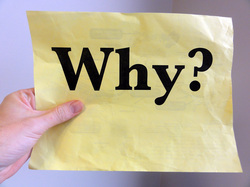
Why?

Why that time period?  Why that race?  Why that land?  Why that day, that moment, that person, that plot, why why why why?

"Does it really matter that much?"

Not every single time, yet even then, you still have to answer "why not?"  Why doesn't it matter?

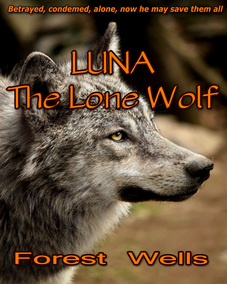
Take my own novel, Luna the Lone Wolf.  Here are some questions I've had to answer over it's development.

Why wolves?
It fits perfectly with the theme of being a "lone wolf".  Wolves are by nature family oriented.  Unlike us humans, they're simple at their core, but expand greatly once dug into.  Really the fact is humans couldn't tell the story well enough.  Not without adding too much into it.  Humans have politics, money, technology, and so many other things we can't get away from.  Wolves have all the emotional traits I need without all that, allowing the emotion of the story to be told totally bare.  Plus being wolves, an animal I was passionate about anyway, it was easy to get excited about the research aspect of things.

Why a forest?
Didn't like the idea of wide open plains.  The ecology of a forest gave me a few more options than other lands would have done.  In this case, it just felt right.

Why a mocking bird?
I needed a bird that could believably make sounds wolves could understand.  Being a breed known for making a vast range of vocalizations, as well being found pretty much anywhere, he fit the bill perfectly.  And by the way, parrots were rejected immediately.  I did not want Iago (from Aladin) in my story, thank you very much.

Why the time period?
Well the time period really didn't matter since this is all about the wolves.  However, since humans were going to be there, might as well keep it current to help the human readers connect with things.  After all, modern humans understand the idea of talking to a "rock".  If the humans were just standing there, talking to no one (I.E. internal implant), it might be hard to have the wolves see it and still tell the human readers what's going on.  I mean, try describing the Millennium Falcon entirely from a wild wolf's perspective and still have the reader know what it is he's looking at.  The moment you try to add some kind of cute description using the thing's name, you've destroyed your perspective.

So on, and so forth.  Every detail has a reason, even if the writer himself is not aware of it.  Luna lives near a river.  Why?  It gave me a way to do things the story requires much easier.  Why write only from the wolves' perspective?  I tried including the humans, but they damaged the story.  There are events that happen to him that also have their reasons, but I can't even post the questions without major spoilers.

The fact is, the writer should always ask each detail what their purpose is.  When I get stuck in a section, I always go back to "why is this here?  Why does this need to happen?"  Often the answer leads to the fix.
  The why is the whole reason the story was born.  It drives all that goes before and is left behind.  I wanted to tell a tale about a loner facing his life as one, and the myriad emotions that brings with it.  I wanted to share his pain, and his joy, with all of you.

You see, from that core reason is where I build everything else.  From Luna being a wolf, to the bird, to the forest, to everything else that builds his world and his life as it must be told.

Ask yourself, why was Star Wars done in "a galaxy far far away?"
  I can think of a few, but I'd like to hear yours.  Think like a writer.  Might be fun.  Why set this intricate, and complex universe so far outside of our own?  Why not just send it a few hundred or thousand years in the future like Star Trek?  Why?

0 Comments

Why Self-publishing?

3/7/2014

1 Comment

 
Picture
There was a time when I sent out a submission, via snail-mail in this case.  I poured over my query letter, worked hard on my synopsis, killed every typo in my sample chapters, sent it off, then spent the next six weeks using my teeth as a nail file.  I was sure it was a good fit.  My story was everything they were looking for.  How could they turn it down?

Then on week seven, I got a letter.  A simple, thin envelope.  Not a good sign.  I opened it, looked inside.... and felt positively insulted! 
You've heard the term rejection slip?  This was the very example of one.  A literal slip of paper, with the standard "Dear Mister Wells," up top, their "Sincerely ect" at the bottom, and right between them, two lines.  I'm not kidding!  Two, #$@#! sentences politely saying "no thank you."

Now
I've gotten rejections before.  Quite a few in fact.  But this... I wish I'd saved it, but at the time I was so incensed I couldn't stand to look at it.  They didn't have the respect to send me a more formal letter?  It didn't even have a letter head for goodness sake!

And yet, I suppose I should thank them.  It was that anger that changed things.

It took time to take effect, but that's when it started.  By then I'd given drafts of my novel to friends, and a couple of sort-of-strangers that I trust, for feedback.  All loved it and can't wait to own a copy of their own.  Then I gave a copy to a Girl Scout from my mom's troop since she was right in the middle of my target audience.

She finished it in a day and has been hounding me for a sequel ever since.

So, everyone who reads it loves it.  They all want to buy it.  And yet the same story gets a rejection slip smaller than a shopping receipt?  I think I'm in the wrong business.  It's clear I have something here.  If the publishers can't see that, then I'll just make it happen myself.  Thus I abandoned my efforts for traditional publishing, and switched to self-publishing.  Been the best decision I've ever made.  I haven't felt this driven since the days after 9/11 when my career first began.  It's a longer grind than I expected, true, but it hasn't stopped me.

And why should it?  I have a story I have every confidence in.  I mean after all, I have a Girl Scout demanding a sequel.
  I've begged and kow-towed to publishers for a long time, only to get a rejection I couldn't use for origami (I actually tried).  Now to be fair, that house was the only one to be insulting.  All the others were actually very polite and respectful.  They still didn't buy it though.  It's a tale being heard a lot more these days.  Even well known authors are moving to self-publishing because they too are having a hard time getting contracts.

"They also want the better profits from it."

In some cases maybe.  And I know some of you may think that's what I'm after.  I'd be lying if I said that wasn't a nice bonus, assuming I even got to that point, but it's been made abundantly clear my story doesn't fit the usual mold.  I've always said, "My target reader is 13-29, but really I think it will appeal to anyone".  I can already hear the publishers crying foul about too large an age range.  One could call it Young Adult, but not really.
  Then you have a story about wolves, told by wolves, entirely from their perspective.  I can't think of another story that is similar to that.  Not saying there isn't one, I just don't know of it.

"It's going to take a lot of work and a lot of money to do it."

You're telling me.  A content editor alone is going to cost $1,400.
  That's without formatting, marketing, printing costs, author copies to take with me to book signings, all told I'm looking at a $5,000 bill.  Then I have to get my name out there myself.  Get exposure.  Be seen, be reviewed (hopefully positively), and be visible enough to get sales.  That's a tall order for a guy working a part time job that doesn't pay much.

But I have to go back to the story.  I know it's good.  I have reliable, honest people telling me it's good.  I know it will sell.  I just have to do the work to make it happen.  And I have been.

As of today, I have an interview lined up for when the book finally hits the market, I have a content editor chosen and ready when I can gather the funds, I have two plans for a publisher - one better than the other but not a guarantee -,
I have plans for some networking to spread the word, I have plans for local book signings on release day, I have an awesome artist working on commissions that will be used for PR materials, and I am putting together a Kickstarter campaign to raise the $5,000 I'll need to make it all happen.

Guess I won't be needing a traditional publisher after all.

1 Comment

Friendly Sportsmanship

2/21/2014

3 Comments

 
Picture
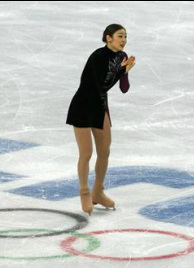
Five skaters remain for the women's free dance.  Two Americans, a Russian who's never won gold, a South Korean often called "The Queen" for her dominance, and an Italian whose country has never won a medal before in the event.  The Russian takes a commanding lead, then come the Americans.  Both are smooth, elegant, and amazing to watch.  Yet both falter, and in an instant you know.  They won't medal.  The comes the South Korean.  She too skates wonderfully, spectacular even.  But is it enough?  Everyone waits on pins a needles.  The Russian watches back-stage to see the final score.  An eerie silence falls over the crowd.

It's not enough.  Silver for South Korea.  Italy holds on for bronze.

The roof blows as the home crowd celebrates the victory.  The Russian skater sprints through the halls to find her coaches and support team to do the same.

And I have a hard time not being happy for them.

Isn't that what sports should be?  What the Olypmics were created for?  Sure, we will cheer for, and hope for, success for our country.  But when they don't, can we not still take joy in a young woman who just won her first ever gold?  For the Italian, who just got the first medal ever in that event for her country?

Announcers often talk about the fraternity of sports.  When an NFL player suffers a serious injury, the players might as well have merged into one team while he's tended to.  Both sides will form a circle to pray for the injured man to be well.  So too in the Olympics, do we see so many with differing views cheering on others not of their nationality.

I can't help remembering a prime example of this back in December.  The final home game for the San Diego Chargers.  It was hard fought, physical, even controversial, but the Chargers beat the Kansas City Chiefs to sneak into the playoffs.  Then, as I'm in line for the bathroom afterward, I turn to a Chiefs fan, a bitter division rival.  I extend a hand and honestly say, "Good luck in Indy."  He takes it warmly, offers a friendly shake and smile.  "Good luck in Cincy."

For reference, by then we already knew that the Chiefs would go on to face the Indianapolis (Indy) Colts in the playoffs, while the Chargers would play the Cincinnati (Cincy) Bengals.

This is true sportsmanship, and what we see in the Olympics.  I promise you, not everyone cheering for the Russian, South Korean, or the Italian, were from any of those countries.  The applause after an impressive jump, or the groan after a painful fall, is not heard from only their countrymen.  All who watch that event are fans of the game, and share the highs and lows of it.  They won't cheer as loud as they would for their team, and that's fine.  It's even expected.  Yet they'll still give a standing ovation when a skater absolutely nails a routine.  They'll still offer a prayer when one doesn't get up after a fall.  I've even seen the athletes sharing in each other's success, or pain, during a competition.  On the ski slopes, you often find the leaders talking away between runs, even goofing off now and then like they were best buddies.

Their countries may not be allies.  They may even be at war.  But for one day, they share the joy of a sport they love, win lose or draw.  With any luck at all, they'll also part ways with a warm handshake and smile, and one will say, "Good luck next time."

And the other will respond, "You too."

3 Comments

Writer's Remorse?

2/7/2014

0 Comments

 
Picture
WAIT!  This isn't about Harry Potter!

Well it is, but it's not really, just trust me.  It's the lead in to my topic, honest.


*WARNING: To anyone who hasn't read/seen the whole series yet
(don't laugh, they exist) this does contain spoilers!*

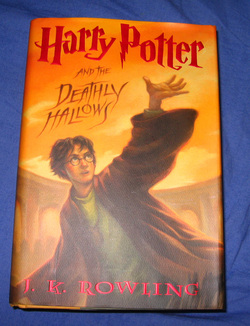
By now we've all heard J.K. Rowling talk about how she feels Harry and Hermione should have been paired together instead of Hermione and Ron.  Since then, there's been a back-and-forth backlash about it.  Some feel she's right.  Others are crying foul for "messing with their childhood".  After all, that's how the story went.  Regardless of how we WANTED it to go, that's how things happened with-in the tale.  Yet it's amazing how instantly polarizing this whole thing is.  But I've got one better.  There are dozens of big name authors who would make similar admissions about their works.

Now Rowling talks about putting
Hermione and Ron together because that was the original plan and she wanted to stick with it.  I'm unsure if that means she wanted to change that plan while writing it or not, but even if she did, it highlights something about writing I think gets lost sometimes.

The story has a life of it's own.  I've talked about this before.  Can we writers still make it go one way or another?  Of course.  Not always the best idea, but we can.  However, after it's all said and done, and the book is on the shelf, writers are always working.  I haven't met an author yet that hasn't mentioned he or she would have done something differently in one of their now published works.

This can lead to a lot of sleepless nights.  For the veteran, it might lead to thoughts about what would have been had they thought of that years ago.  For the novice, they try that much harder and wait that much longer to take the next step.  "What if I missed something?" they'll ask.  Fact is, they will.  They'll look back and think "wow, should have done that differently.

So where dose that leave the reader?  If they hear nothing about it, nothing changes.  But when they do, it makes them re-think it.  They see that world through the new perspective.  Personally I'm not sure why that's a bad thing.  In the case of Harry Potter, think on this; Maybe
Hermione and Harry did have a thing for each other, but somewhere along the way, something happened and it just never got anywhere.  Perhaps Hermione secretly thought they'd end up together.  Or maybe Hermione took herself out of the running early because she didn't feel she could measure up to, or handle on a constant basis, the hype of "Harry Potter, the boy who lived."

I can already hear the out-cry.  The screams of how ridiculous those ideas are (that last one drawing an instant rebuttal from my mom), and I'm not sure I blame you.  The good books give us a world so real we feel we've lived -scratch that- are living in it.   But once the anger fades, why not let it build the world that much more?  Think about it.  You're there, in class with Ron, Harry, and
Hermione.  You're traveling with them, facing the same dangers, and seeing the same signs.  What would you have done?  Would you have nudged Hermione and Harry together?  Would you have scoffed at the idea of her hooking up with Ron, only to be shocked when they announced their engagement?

Would you have done the same thing before you heard Rowling's
admission?

That last one is the sticky one.  We writers are always second guessing ourselves and always will.  Perhaps we should keep our "woops, that's wrong" moments to ourselves for the sake of the reader.  Then again, perhaps it's best we share the mistakes we think we made so that we may share our real selves with the reader.

That's a hard line to walk, and I doubt many readers would be entirely sure which way they'd want it.

0 Comments

Knowledge is Safety

1/21/2014

0 Comments

 
Picture
There's a wolf sanctuary in Lunerne Valley that's not like other sanctuaries.  Yes they rescue wolves from illegal breeders, bad owners, ect, but they do something with their wolves few if any others would dare do.  They let you go into enclosures and actually pet the wolves!  Yes, I'm talking about Wolf Mountain Sanctuary, the place I talk about here.  Alternately, I heard of a zoo somewhere near Buenos Aires, Argentina where you can get just as up close and personal with lions, tigers, and bears (Oh my!  lol, sorry.)

Now many would think these places are nuts.  "Letting the general public get that close to wild animals?  They're just inviting an incident!"  Normally I'd even agree.  But, at least in the case of Wolf Mountain, they have yet to have such an incident.

"Well they've just been lucky."

Having been there, I say quite the contrary.  You see, they can do this because they know exactly what they're dealing with, and how to handle it.   Tonya Littlewolf, the owner of Wolf Mountain, understands her wolves and is always watching.  She knows what to look for, and when the wolves are restless or uneasy, she clears the enclosure.  That isn't luck.  That's experience.

As I was reading about this other zoo in
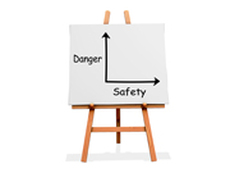
Buenos Aires, I got to thinking how things so drastically dangerous are rendered far safer when you know what you're doing and respect that with which you're working.  For example, think about this: Mythbusters on the Discovery channel once did a piece on coal walking.  You know, the art of walking barefoot on hot coals.  Those who were trained, even minimally, were able to do it without a problem.  Those that weren't, got three steps before being burned.  The difference?  Training and experience.  The dangerous is made safer when you understand the risk and know how to handle it.

"You can't make the dangerous safe just by training."

Mostly true.  I'll explain why in a sec.  But first I'll agree with the core of that.  You can't make fire-fighting safe no matter how well trained you are.  Then again, if two people were given the same gear, and told to fight a fire, and only one was trained, had badly injured would that untrained person get?  The dangerous can be made safe-ER when you understand what you're doing and what you're dealing with.

That said, I'm going to show you how the dangerous can be made safe with training.  At my job, I could very easily;

Start a large grease fire,
Cause severe chemical burns to myself or others,
Suffocate myself or a co-worker,
Blind myself or a co-worker,
Infect others with minor to moderate food poisoning.

....................... I think the NSA just added me to their watch list.

Ahem, anyway, I bet you're wondering where I work that I can do all that.  What if I told you I work at a movie theater?  That's right.  Without the basic training I got from my early days, I very definitely could do all that by accident.  That grease fire is as simple as putting oil in a hot kettle without popcorn seed in it.  There are a lot of cleaning chemicals I work with that are hazardous, including one that would do a fair amount of damage just by getting onto my skin.  As for the food poisoning, this is why I have to get a food card every two years to prove I know how to avoid that.  It's called the health code, and if I didn't know it, I'd be serving people under-cooked hot-dogs laced with whatever bacteria I carried with me.  Not good.

So in that way, the dangerous can be made safe.  Toss someone into my job with no training at all, and you'd probably have a kettle fire inside of an hour.  They may panic, try to use water to put it out, next thing you know, our theater is on the 11 o'clock news after it's been reduced to ashes.

Now making popcorn is A LOT different than making sure rescued wolves don't bite visitors.  For one thing, I don't think the wolves would care to have canola oil and seasoning salt in their fur.  But even with the wolves, because the owner understands them, and knows how to handle them and those that come to visit, she has yet to have a single incident.  I'd be willing to bet she never does, unless a visitor ignores what she tells them.  Then that's on them for not listening to instructions.

I bet you all have training in something that, if someone who knew nothing about it tried it, would hurt themselves or others.  For one thing, there's driving.  If we hadn't learned how, we'd be pretty dangerous on the road.  So what things do you know that, without training, would be disastrous if tried?  It's been a while since I heard from my faithful followers.  I bet some of you could surprise me with a job that seams idiot proof, but would probably get that "idiot" hurt or killed if he didn't have the same training you do.

0 Comments

When did you know?

1/6/2014

0 Comments

 
Picture
I've been working on various story drafts for a while now.  Some I'd like to forget.  Others are tucked away for future use now that a writing cue has developed.  One is on the path to publication, and another is preparing for its turn on the cue.

In short, I've been writing stories (and a few poems) since the events of 9/11.  I've learned a lot over the years, enough to begin advising people newer to the journey than I am.  Now I too still have much to learn, but I know enough to confidently offer advice and insight to those taking that first step.

The best part, is they have this way of teaching me too.  For example, there's one person who I've been trading messages with.  She's young in the craft, so young she doesn't see the signs within her that she's got a good shot at being a good writer.  Stories taking over, ideas popping up without effort, that sort of thing.  I've been offering advice, or finding those who can when we hit areas I don't know about yet.

In one message, she asked me the following:
"
At what point did you feel you were an author, and could legitimately say you were one and make a Facebook page and website? Was it after you actually wrote the book or when you were writing it?"

Uhmmmm.... That's a good question.  The Facebook and website parts are easy.  Once I knew this was what I was going to do, I knew I had to get those things to do it well.  Beyond that though, when did it happen?  At what point did I start calling myself an author?

In truth I don't.  I subscribe to the idea that an "author" is a writer who's work has been published.  It's why I always say I'm a fiction writer.  I mean let's face it, all I have are some ideas that sound good and read good to me, but have yet to make it onto shelves to be read by others.  I don't feel like a full fledged author yet.  I'm... to use a sport metaphor, I'm a prospect yet to be drafted by anyone.  I want to play in the NFL, but I'm not there yet.

Of course it looks like I'm going to go undrafted (AKA, self-published), but that doesn't mean I won't still do well.

So will publication make me feel like an author?  I'd like to think so.  Maybe when I hold that first book in my hands I will.  Yet, going back a bit, when did I start calling my self a writer of any kind?  The first poem the day after 9/11?  The documentary that I'd rather forget.  The sci-fi whose world was born a few days after, but after I've grown and learned, I realize still needs work?  When was the day I woke up and knew, "I'm a writer, someday to be an author"?

I've looked back hard trying to figure it out.  Truth is, there may have been a day, I just can't remember it.  Still, it's an interesting question.  When do we know who we are?  When did I know writing was going to be my life?  What's the criteria to meet so that you can go from somebody just tossing words together, to an aspiring writer?

I'll let you know if I ever find out.


0 Comments

Lemonade?  No thank you.

12/21/2013

1 Comment

 
Picture
"When life gives you lemons, make lemonade."

It's a phrase we've all heard and is fully worth taking to heart.  After all, life can be pretty mean sometimes.  It'll find every chance to knock you down, take your drive, and render you hopeless and feeling like it's not worth trying.

We've all been there.  I've been there.  Several times.  Each time I spent a while pondering what the heck I'm fighting for.

But lemonade?  I've never cared for it.  I don't care what life gave me.  I want more.

Now to be fair, there are some things that can't be ignored.  Life gave me a bad knee.  I was told I'd grow out of it, but I haven't.  I still think I'd have turned into a pretty good NFL running back, assuming I found the right coaches, which I like to think I would have.  But my knee kept me out of pretty much all sports in high school.

So instead, I got into fencing in college.  Low impact, but VERY analytical.  My teacher called it high speed chess with a three-foot blade.  I wasn't too bad at it actually.  Good enough to go to the Olympics with time and effort?  Probably not, but still, it was good.

But long before that, life gave me Dysgraphia.  A learning disability so unknown I had to teach my spellchecker how to spell it.  It's been described as a short circuit in the brain that makes it hard to get thoughts from my head to my hand.  It fits.  There's no such thing as "jotting down" for me, as even a short paragraph can be a ten minute chore.  Simple shopping list?  Heh, not for me it's not.  I can't handle as much stress as you.  My short term memory is bad.  My handwriting is STILL terrible.  By all accounts, I shouldn't be able to write very well.

Oh yeah, did I announce yet that my first novel is going through the early stages of self-publication?

Lemonade?  I'm not settling for that.  And I think too often we're told we should.  People see our weaknesses and say, "hey, find what you can do, and make do with it.  Find the joy in it."  Find joy in being limited?  Why settle?

Now before you jump down my throat, the sentiment is actually good.  If we can't find the joys in what we can do, we'll be miserable forever.   But I heard about a young girl who is legally blind, and another fellow who lost both legs below the knee.  Life gave them a ton of lemons.

That girl has earned medals in state gymnastics championships.  And the guy?  You probably heard of him.  He ran in a couple of track and field events in the last summer Olympics.  No, not the special Olympics.  The regular one!  Against people without limitations!

We can settle for what we're given, and there are times where we really should.  With my knee I don't dare go out for football.  One wrong hit or plant, and I'd probably ruin it forever.  But I'm a fiction writer with Dysgraphia.  I've never let anything stop me from doing what I want to do with my life.  9/11 taught me that.  I've taken life by the horns and made it work for me.  I don't care what it throws at me, nor should you.  We shouldn't ever let limitations stop us from achieving what we want to do with our lives.  It's like a phrase I saw on an online forum board.  I'd give credit if I knew who said it first, but I've never forgotten it.

"When life gives you lemons, throw them back in its face and demand chocolate."

That legally blind gymnast, that double amputee track runner, that writer with Dysgraphia, we were all given lemons.

We all demanded chocolate.

1 Comment

Build it Real

12/6/2013

3 Comments

 
Picture
“Missile Launch!”

From the moment you read, (and at times, hear) those words, you know exactly what’s going on.  It's as if you too are a member of the crew.  It’s not just the one thing, it’s everything.  The hundreds of details going on the second you hear those words.  You know what's coming, what you're dealing with, how you plan to face it, countermeasures about to be used, you know EXACTLY what's going on.

This is how you know when a writer did their job.

Last time I talked about the power fiction holds when done well.  Now I'm going to focus on what that can look like.  In so many shows and books, the worlds are pretty good, but lacking just one tid bit.  One or two little things that don't quite get it there.  As much as I love Star Trek, my biggest pet peeve about their tech
is the fact that any time their engines die, they come to a stop.  Engines loose power, and we cut to seeing the ship slow to a halt.  Uhm, it's space right?  Nothing to act on the ship, nothing to slow it down.  So if the engines are dead, why is the ship stopping?

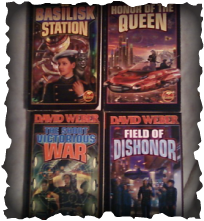
That's what I love about the Honor Harrington novels by David Weber.  I'll admit, he gets a bit heavy on the science, and at times I glaze over it.  But at the same time, he finds a way to keep the world living and consistent despite that hole.  As you read each book, you learn more about how the world works, and how things work in it.

Right now, I could tell you quite a bit about the military ships, how they fight, and why they use what they use.  Why?  He built the world that good.  The characters are so real I've gotten to know them like I was there.  At times I wonder what position I'd hold under Harrington's command, and how much she'd notice me.  Would I be on the bridge, the hanger, the ground.... the brig?  I know one thing, I'd be itching to serve under her, or any of her former officers who earn their own command.

Good books (and movies or TV shows) do that.  They build a world so completely you get to understand it like you live in it.  When playing the game Mass Effect,
it's much the same.  The tech works.  The world works.  Shoot, I wanted to jump in and become an anthropologist who specialized in the Krogan culture (Krogans are one of the alien races in the game).  It fascinated me that much, and it's not even real!

I know more than a few people roll their eyes when we say books transport you places.  All I can say is they've either never read the right books, or they haven't surrendered to
them enough.  Because I have been to Tuchunka, the Krogan homeworld.  I have run with wolves with Firekeeper.  I have been in battle aboard the HMS Fearless, twice.  And I have been to many other places, all very real to me.

What about you?  Where have you been?  What books were written so well the world was truly alive to you?
  I can't be the only one who's been other places without leaving my favorite chair.

For one thing, my favorite chair is on the HMS Fearless.  You know, the one where I get to see Honor Harrington do what she does best.
  And sometimes, when I get really really lucky, I get to pet the treecat on her shoulder.

3 Comments

The Power of Fiction

11/20/2013

1 Comment

 
Picture
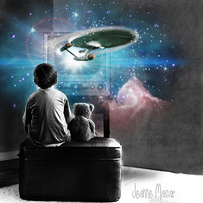
I’ve always been a big fan of Star Trek.  Not because of the tech, or the action, but because of the power it holds.  Scenarios I’ve never imagined are played out in full detail, full extent, and full, real, consequence.

Take for example
an episode of “Star Trek Enterprise” titled “Cogenitor”.  In it, they meet a race with three genders, and all three are required to conceive a child.  However the third, called a cogenitor, is treated more like a pet then a sentient being.  Naturally a member of the crew rises to its defense.  He teaches it to read, talks about going places it would like to go, even gives it a tour of the ship and a name, which it otherwise does not have.  Good things right?  Harmless and empowering.  Not so fast.  The efforts lead the congenitor to ask for asylum.  Captain Archer (this series Enterprise Captain), after careful thought, denies the request.  It's not his place to interfere in a culture he just met.  Thus the cogenitor is sent back with its people.

Soon after, they hear from the other ship.  The cogenitor has taken its own life.  Captain Archer is beside himself.  He's angry at his officer for not thinking.  As he puts it, a life is lost, and a child unborn, perhaps for a long time, because of the actions of one crewman trying to do the right thing.

It’s said the road to hell is paved with good intentions.  Here is a glaring example, as well as an example of the power of fiction.

Just reading the reader's digest version of the episode - which by the way dose not do it justice - is enough to get you thinking.  So many of us would be right there with that officer.  "Free the oppressed people.  Empower them.  Show them what they've been denied."  Would we be so different?  And would those actions have the same results?  You notice I always called the cogenitor "it" above.  No other pronoun was given.  The aliens probably never gave it one.  Yet I wonder how many are ready to scold them and me for using such a term.  Amazing how one small part of the story is already polarizing the viewers.

Fiction, in all it's forms, holds that power and so much more.  Star Trek makes us look within ourselves in ways we rarely consider.  So do many books, movies, and other TV shows.  It's not just the worlds we visit within them.  Fiction
warns us of dangers of all kinds.  It lifts us up in time of strife.  It empowers us to overcome them.  It warms the heart.  It prepares us for things we never thought we needed to be ready for.  It’s magic in a bottle, when crafted correctly.

When I lost a valued pet in high school, it hit me hard.  He was my best friend, and the only thing keeping me going (till 9/11 happened, but that's another story).  When he died very suddenly, I went searching for a book by Wilson Wrals.  Where the Red Fern Grows.  I didn’t want the story.  I didn’t want the characters.  I didn’t want the world.  I wanted the emotion.  The love, pain, and survival of both that came with it.  I needed to remember what it was like to cherish someone so deeply, then lose them so tragically, then find a way to survive without them without losing their memory.  This one book held all that.  Plus the story, characters, and world weren’t bad either.

A copy of Where the Red Fern Grows now sits on my shelf.  A special dedication to that pet written by my mom in the front cover.  I may never read it again.  I may read it next week.  I don’t know.  But just having it there, sitting in view, brings it all back.  The love shared, the joy of the days spent, the fun had, as well as the loss, the grief, and the journey past it that required so much more than tears.

A book lead me through depression, through grief, back into a world
that made sense.  Still others have shaped me in ways I probably don't even realize.  Show like Star Trek let me see the world in ways I don't normally think.  All of a sudden I wonder, if I were Captain Archer, faced with this diplomatic situation dropped in my lap, what would I do?  Just the question is enough to keep coming back.

What about you?  What stories, shows, or other works of fiction have left their mark on you?  What makes them so powerful?  Is it like Star Trek, where they face real world situations that don’t always have a happy ending?  Is it like Where the Red Fern Grows, where it’s more the emotion than the story?  What makes them so cherished, so loved, that you keep them displayed on your bookshelf?


1 Comment
<<Previous
Forward>>

    "Be You"

    "Let your words be eternal yet time honored.  True yet not betraying.  Strong yet uplifting.  Challenging yet harmless.  But above all, let all you say, do, and be, remain forever and exclusively you."
    - Forest Wells

    A blessing, and perhaps a personal hope, for this blog and so much more.


    REMINDER: Blog is now on Wordpress. You can find it via the link below.
    https://forestwells.wordpress.com/2018/06/26/coming-soon-impressions/

    Archives

    June 2018
    December 2015
    January 2015
    December 2014
    November 2014
    October 2014
    September 2014
    August 2014
    July 2014
    June 2014
    May 2014
    April 2014
    March 2014
    February 2014
    January 2014
    December 2013
    November 2013
    January 2013
    December 2012
    November 2012
    October 2012
    September 2012

    Categories

    All
    Writer's Life

    Subscription Service not working properly.  I am working to fix it.  I apologize for any inconvenience.

    Enter your email address:

    Delivered by FeedBurner

    RSS Feed

Powered by Create your own unique website with customizable templates.
Photos from graffiti.freiburg, VinothChandar, ZeroOne, Muffet, markhillary, Editor B, Kool Cats Photography over 2 Million Views, Jeanne Masar, marcusrg, soundfromwayout, quietlyurban.com, The_JIFF, Ashley Campbell Photography, Will Folsom, D.B. Blas, Doug Kline, Rob Marson, celesteh, rocksss, ✖ Daniel Rehn, Amy Aletheia Cahill, Pink Sherbet Photography, One Way Stock, APB Photography™, *~Dawn~*, fdecomite, Jade&hearts;